
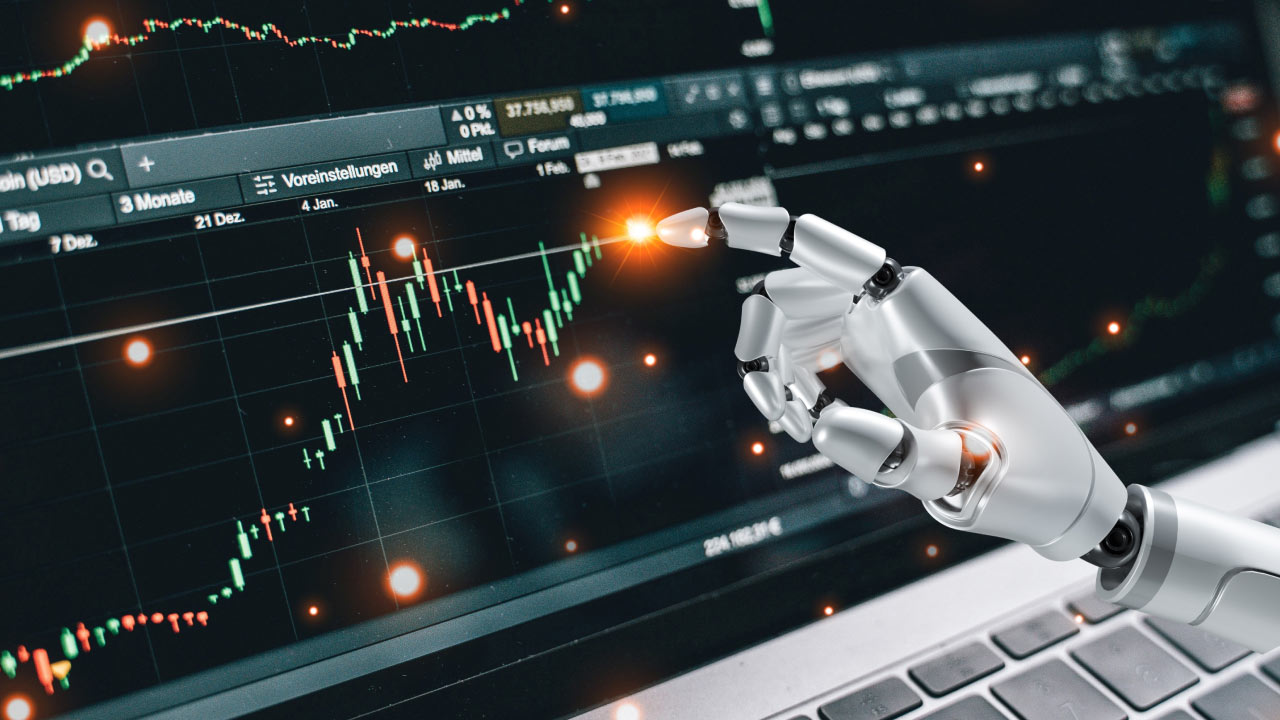
In the financial world, futures and options are terrific speculative instruments. Consequently, traders look at the S&P 500, which is the index that measures the overall health of the US stock market, to place their bets on the market trend. Both futures and options allow one to make money if he is right about the direction of the S&P 500; however, these two instruments differ considerably in terms of risks and, to some extent, in their combination strategies. Knowing how to interpret an S&P 500 Futures Barchart, which is a graphical representation of the price changes in S&P 500 futures, can be a ticket to success for those traders who are trading the futures vs options dilemma with an efficient solution to the problem.
Understanding the S&P 500 Futures Barchart
The S&P 500 Futures Barchart is a leading instrument for a trader aimed at monitoring the price changes of S&P 500 futures agreements, or contracts that commit one party to a purchase or a sale of the S&P 500 index at a set price on a certain future date. These charts illustrate the price in a number of ways that include candlestick and bar charts, and they also provide the most significant values, including Open, High, Low, and Close, for a predetermined time period. These are used by traders to spot trends and get a grip on market psychology, as well as determine their trading positions from set support and resistance levels, as well as market volatility all of which are important for planning future trades. Most of the time, the chart has been enriched with activity and momentum tools such as moving averages and RSI that allow traders to establish the prevailing market mood and take more informed trading steps.
Trading Futures vs Options: Key Differences
Futures and options are both derivatives that allow traders to profit from market movements, but they differ in terms of structure, risk, and potential rewards. Futures are binding agreements that force the buyers to acquire and sellers to deliver the underlying asset at a future date; therefore, execution of the contract by both parties is inevitable. With futures, leverage is granted too, thus it is possible to manage a large position with a smaller wallet. However, the risk of heavier loss is still present. Meanwhile, options grant their purchasers the privilege, but not the obligation, to buy or sell the underlying asset at a certain price within a stipulated time. Additionally, options have time decay, meaning that they will lose their value as the expiration period approaches. However, their risk is limited to the premium paid for the option, thus allowing them to be less risky than futures for buyers.
Using the S&P 500 Futures Barchart for Futures vs Options Decisions
The S&P 500 Futures Barchart is at the disposal of traders when they need to make a decision on whether to use futures or options. Suppose the chart indicates a solid and lengthy trend towards a certain direction; then, to exploit the trend, a trader may decide to go for a futures contract, as it lifts the trader directly to the price changes without any time decay risk, as in the case of options. Instead, if the chart signals extreme volatility or hesitance, it will create the ground for a more preferable use of an options strategy. With the help of the chart, traders can also locate potential areas of support or resistance levels where the price might break through, and that in turn could determine whether to use a futures or options plan.
Strategic Trading with S&P 500 Futures Barchart
The S&P 500 Futures Barchart works in tandem with the deciding futures vs options question to provide the market trend and volatility, based on which the trader can conceive distinct strategies. As an example, if the price levels are about to surge, as indicated on the chart, then the trader may go for the full price movement with a futures contract. Conversely, a trader who anticipates a decline in the market but wants to exercise a limited risk can therefore acquire the right to sell by buying put options or initiate a hedging strategy. The Barchart’s study of volume, price action, and the use of technical tools such as the Relative Strength Index (RSI) helps traders to determine which of their instruments futures or options is most in line with their market comprehension, risk preference, and trading goal.
Conclusion
To sum up, both futures and options provide a trader with different benefits when used to speculate on the future trend of the S&P 500. The decision between the two, however, is dependent on factors such as the state of the market, the trader’s risk appetite, and his trading goals. Traders who diligently study the S&P 500 Futures Barchart can get a clear picture of the market trend, breakout points, and volatility, which consequently will prompt them to make the right choice. Whether it is the leverage and direct exposure to the price movements of the futures or the flexibility and limited risk that come with the options, knowledge on how to read the Barchart will dominate the trading futures vs options decision making process.